
Dialova team ·
IRC, Reimagined: Why Choose Dialova
IRC isn't just about the interfaces of the 2000s. Discover how Dialova combines an open protocol with a modern chat experience, including profiles, webcam support, and games.
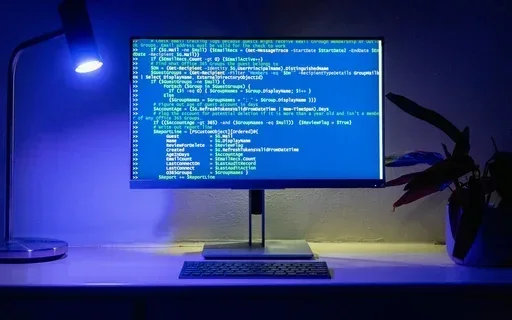
When IRC is mentioned, the same memories often come up: mIRC, a gray window, nicknames preceded by symbols, and a few commands to remember. To join a channel, you'd type /join. To change your nickname, /nick. It gives the impression that this way of chatting belongs to another era.
However, this image mainly tells the story of the software used back then. It doesn't define what an IRC-based service can offer today.
On Dialova, you open the chat, choose a channel, and start talking. Around this conversation, you'll find profiles, private messages, a webcam, and games between members. IRC is still there, but it doesn't have to take up all the space.
IRC is not an interface
mIRC is software that speaks IRC. Dialova is another entry point, with a web interface and a different experience.
The protocol defines how messages and events circulate between participants and the server. It doesn't choose the color of the buttons, the presentation of profiles, or how to navigate on a phone.
An interface can therefore offer a button to join a channel, a menu on a username, or a list of conversations, all while relying on the same IRC exchanges as a traditional client. Commands still exist for those who appreciate them; they don't need to become mandatory for others.
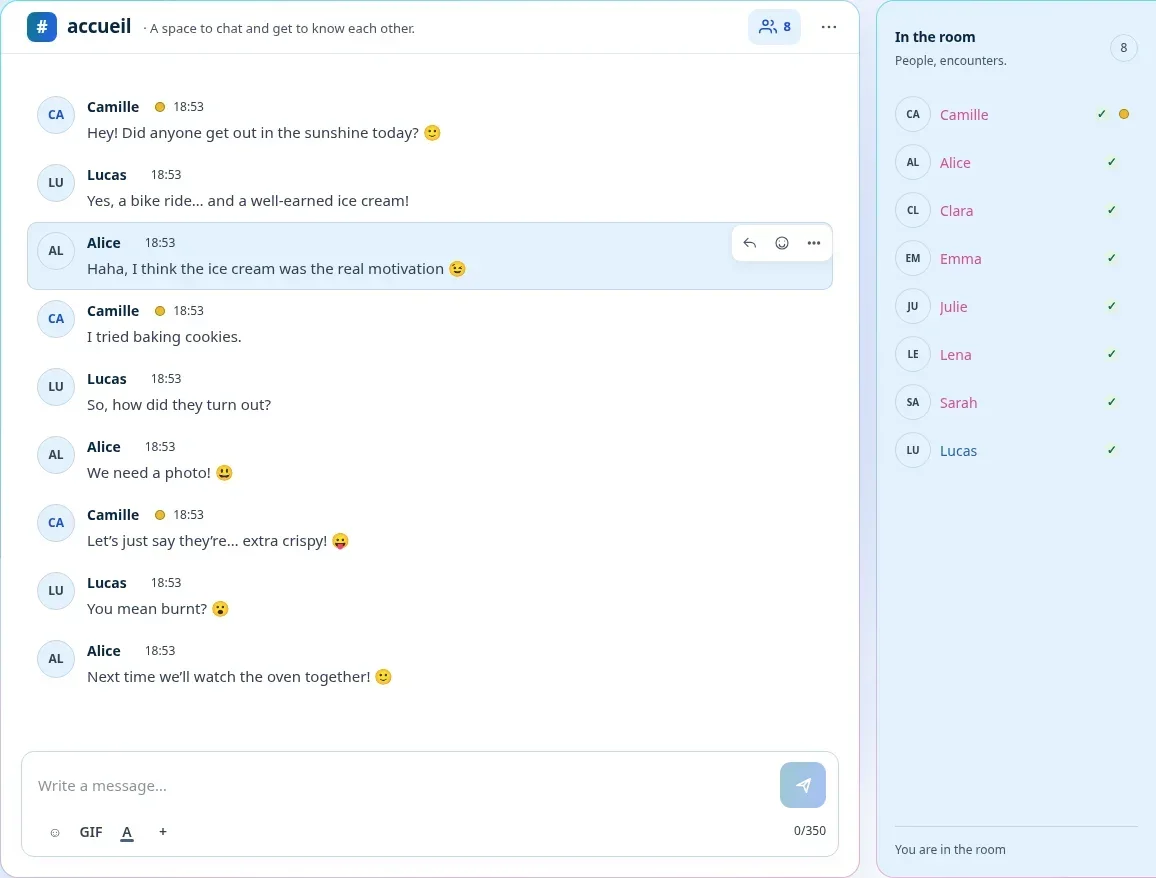
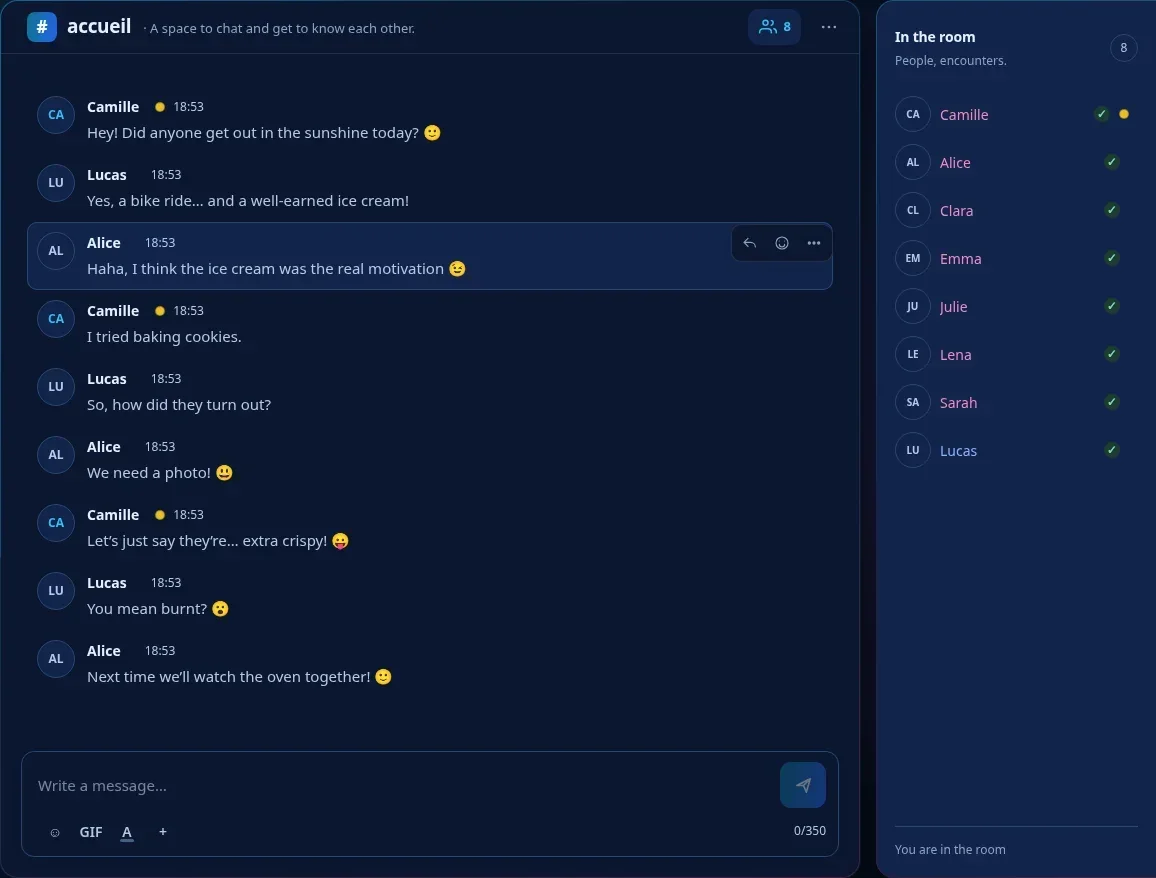
A view of the channel illustrated with demo accounts.
It's this distinction that allows us to bring IRC back into fashion: preserving an open conversation base and building an interface adapted to current uses.
Simplicity That Prioritizes the Product
A community service isn't just about delivering messages. It also needs to allow users to discover members, manage their profiles, invite someone to play, or share a moment via webcam.
Asking IRC to directly handle all these functions would be giving it a role it wasn't designed for. In Dialova, it handles conversations, channels, presence, and related events. The application organizes social functions around this core.
This separation has a concrete advantage: evolving a profile or adding a game doesn't require reinventing how a message reaches its channel. And improving the interface doesn't force you to replace the discussion network.
The simplicity of the protocol then becomes a space for product freedom.
One Conversation, Multiple Software Applications
Interoperability is perhaps one of the most interesting aspects of IRC today.
One person can participate in a channel from the Dialova web interface while another uses their own IRC client. They find themselves in the same conversation, with the same messages and the same participants.
This doesn't mean all software offers every feature of the site. A classic IRC client doesn't automatically become an interface for Dialova profiles, games, or webcam. However, standard conversation functionality isn't tied to a single presentation.
You might prefer the convenience of the site, the habits of installed software, or a more minimalist interface. The network remains accessible beyond a single screen.
This freedom embodies the spirit of the internet: a shared protocol, multiple ways to use it. For those who want to try, our guide to connecting with mIRC explains the process.
Ergo: An IRC Server for Today
Behind the Dialova chat is Ergo, a modern IRC server written in Go, which includes account management and conversation recovery features. It supports IRCv3 extensions, which evolve the protocol.
On Dialova, these possibilities translate into several concrete uses:
- Authenticated connections: Access to the network is linked to your Dialova account, using SASL, the authentication mechanism used by compatible IRC clients.
- TLS encrypted connections: Exchanges take place over secure connections between the browser, the service, and the IRC server.
- Better identified events: Account information and timestamps allow the interface to process messages and their recovery.
- Recent history: The interface can retrieve exchanges available on the server according to configured limits.
- Usage from multiple clients: The same account can reconnect to the network from the Web and a compatible IRC software.
It's important to be precise about the history: Ergo's history is currently limited and stored in memory. It's not a permanent archive; a restart of the IRC server can make it disappear. Offline private messages, however, have a separate mechanism within Dialova.
Accounts, Channel Permissions, and Login Controls are also part of this foundation. They complement website moderation, without replacing the human effort needed to create a welcoming community.
A Web Identity, Controlled IRC Access
How to prevent someone from joining IRC simply by pretending to be a Dialova member?
The link doesn't rely solely on the displayed nickname. The server must verify that the connection is authorized to use the corresponding account.
From the website, this step is automatic. Once the web session is verified, Dialova prepares a single-use temporary ticket associated with the account and the session. The service uses it to authenticate the connection with Ergo. The user doesn't have to copy an IRC password or understand the negotiation that takes place in the background.
For external software, the process is different: the member can generate an IRC connection key, distinct from their web password. It is presented only once, can be revoked or replaced, and its raw value is not stored in the database. The client uses it to authenticate with SASL over a TLS connection.
This separation avoids giving the website password to an IRC software. It also allows revoking this access without considering the nickname as sufficient proof of identity. The checks take into account the account status and any suspensions.
The key remains a secret: anyone who possesses it could attempt to use it. It is neither an encryption key for conversations, nor a promise of end-to-end encryption. TLS protects connections; the service processes messages to route them.
The Webcam Embodies This Philosophy
IRC doesn't transmit Dialova video. It doesn't need to for the webcam to be part of the experience.
The chat provides the conversation and the presence of participants. Dialova adds a distinct video system and the commands that allow it to be used within the interface. You can discuss in the channel and open a webcam without requiring the IRC protocol to become a video protocol.
Games follow the same logic. An invitation can arise in the middle of a discussion, then a Poker table or a game of Block drop or Snake opens in the chat. The game has its own rules and its own operation, while remaining integrated into the life of the channel.
Profiles and notifications are also complementary services. Their integration provides a consistent experience, without claiming that IRC knows how to do everything.
This is a way to modernize around a proven protocol: enrich what members can do together rather than replace the conversation that brings them together.
Why Not Create a Proprietary Protocol?
Developing your own conversation system can seem natural when building a new site. But behind a text input field lie many problems: channels, presence, permissions, private messages, disconnections, reconnections, moderation, and compatibility between clients.
Creating a proprietary protocol doesn’t eliminate these questions. It means resolving them, maintaining the choices made, and developing software capable of understanding them.
Leveraging IRC allows Dialova to focus more effort on its community experience: making interactions enjoyable, facilitating member discovery, improving mobile usage, and offering activities to share.
This choice doesn’t erase the integration work. It provides an existing foundation and additional freedom: access to conversation doesn’t exclusively depend on the client we develop.
IRC also has its limitations
IRC wasn’t designed as a complete social platform. Rich profiles, media, mobile notifications, and video require additional systems. Persistence depends on the server, its configuration, and, in some cases, application-specific mechanisms.
Interoperability primarily concerns conversation. A feature available on Dialova won’t necessarily be visible in the same way in another software. Moderation and certain web interface protections don’t have the same scope in all clients.
These limitations don’t make the choice less interesting. They invite us to maintain clear responsibilities, explain what’s actually available, and avoid promising universal compatibility.
Enjoying IRC, without having to learn it
Users shouldn't need to know IRC to enjoy IRC. On a modern site, they click on a channel, type their message, and chat. Commands, server connections, and protocol details can completely disappear behind the interface.
Those who know and appreciate IRC still retain that freedom: using their own client and accessing the network via the protocol itself.
The discussion continues
Comments 0
Comments are public.
Loading comments...