
Dialova team ·
The History of Chat on the Internet: From Early Forums to Modern Messaging
From early computer exchanges to IRC forums, from MSN to mobile conversations: a look back at the history of chat and what keeps an online community alive.
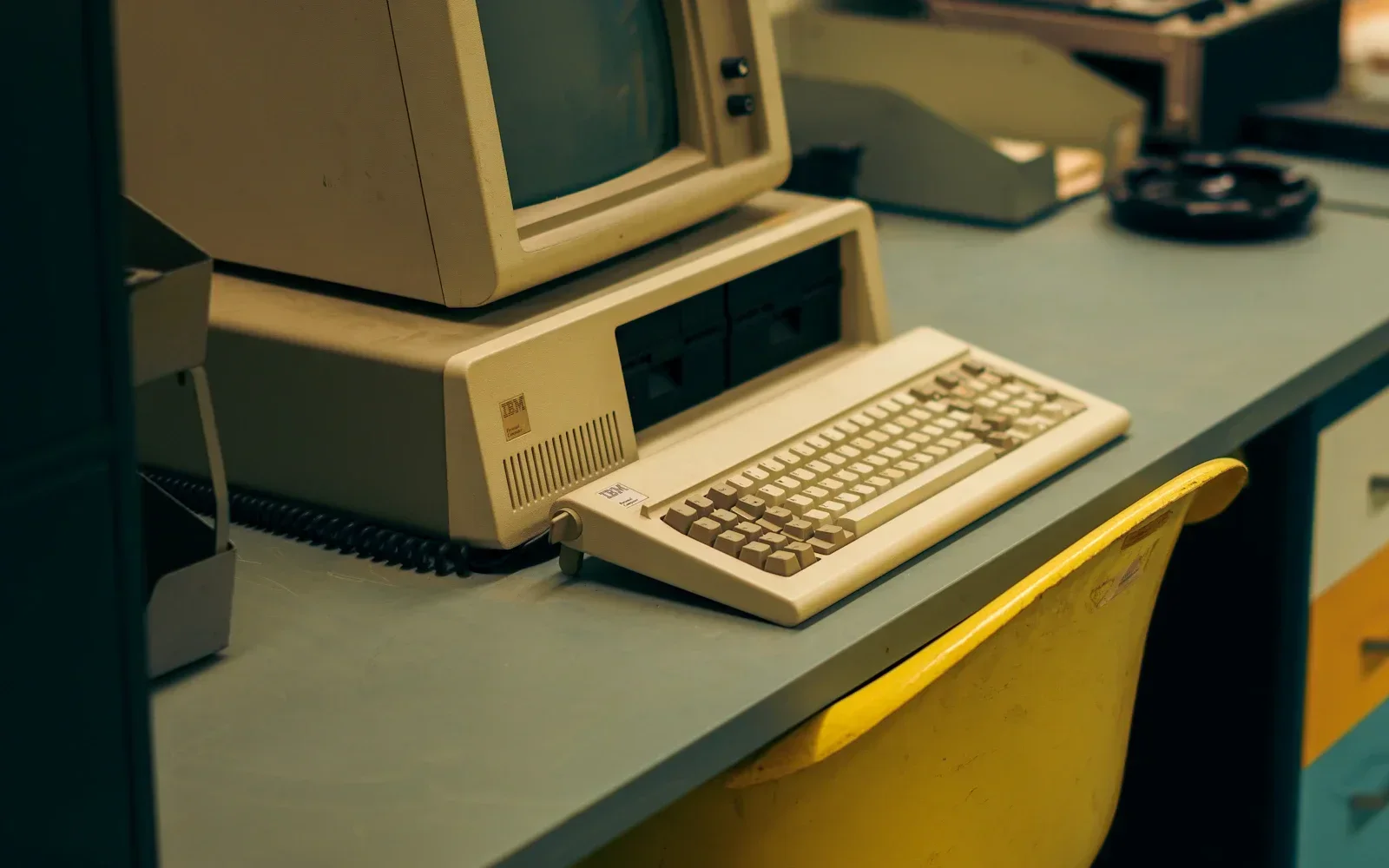
A username, a chat room, scrolling lines of text, and a greeting to strangers. For some, this scene evokes a family computer and the sound of a modem. For others, it simply resembles their evening yesterday on a phone.
Chat has changed its appearance, but its original idea remains surprisingly familiar: to gather at the same time, in the same space, to chat remotely. Before mobile apps, before social networks, and even before the Web, users were already seeking to make computers a place to meet.
Its history isn't that of a single inventor or a software program that replaced everything. It's a succession of experiences, communities, and habits whose traces we still find in our conversations.
Before the Web, Computers Already Brought People Together
The Internet and the Web are often confused. The Internet connects networks; the Web is one of the services that rely on it, the service of pages viewed with a browser. The CERN locates the birth of the World Wide Web in 1989, with the work of Tim Berners-Lee.
Electronic exchanges between users, however, are older. The Computer History Museum recalls that time-sharing computer systems of the 1960s already hosted conversations and discussion groups. Several people shared the resources of a computer and could also use it to communicate.
This wasn't yet the public chat on the Internet. But an essential idea was present: behind the terminal, there was someone to talk to. The computer was no longer just a machine to give instructions to.
1973: PLATO and the first chat rooms
At the University of Illinois, PLATO is initially a computer-assisted teaching system. It also becomes a ground for social experimentation. Its users develop tools to exchange, discuss, and play together.
In 1973, Talkomatic appears on this system. The University of Illinois museum presents it as a precursor to chat rooms, created by Doug Brown. The same story brings together private messaging tools and collective discussion.
What's important to understand the rest is not just the technical feat. People meet in a space that isn't a physical room, recognize regulars, and spend time there for the pleasure of exchanging. The virtual chat room begins to resemble a living space.
PLATO is a precursor: it shouldn't be confused with a website or current Internet application. However, it shows that the community dimension of computing doesn't date back to social networks.
The 1980s: A French detour via the Minitel
In France, part of this discovery involved a small terminal and a keyboard. Deployed in the early 1980s, the Minitel provided access to remote services, including messaging. The French National Library recalls the role of these uses in its section dedicated to the Web of the 1990s.
The Minitel is not the Internet. Its network and access model are different. However, it is part of the history of remote conversations that preceded the arrival of the Web in homes.
Writing under a pseudonym, engaging in conversation with someone you don’t know, finding a discussion space: these practices will not be entirely new to French users who will later discover chat on the Internet.
There’s also a difference that long-time users haven’t forgotten: staying connected could show up on the bill. Discussion didn’t yet have the discretion of an app that fits in your pocket.
1988: IRC Gives Chat on the Internet a New Dimension
In 1988, Jarkko Oikarinen created IRC, for Internet Relay Chat, at the University of Oulu, Finland. In his account of the birth of IRC, he describes this project developed from his experiences with existing discussion systems.
IRC allows you to chat live with multiple people on networks of servers. You join channels, choose a nickname, follow the public conversation, and can continue privately.
This organization gives chat a lasting form. A channel can have its theme, its rules, its moderators, and its regulars. You don’t necessarily come to it looking for a specific person: you enter a conversation, and then you get to know each other.
Another important point: IRC doesn't refer to a single interface. It's a protocol. Different software can provide access to the same network and its discussions. The window changes, but participants find themselves in the same place.
1995: mIRC and the memory of computer chat rooms
For many internet users, IRC remains associated with mIRC, its Windows interface, its list of nicknames, and scrolling messages. However, the two names don't refer to the same thing: IRC is the protocol, mIRC is one of the software programs that allows you to use it.
Its author, Khaled Mardam-Bey, states that he released the first public version of mIRC on February 28, 1995. His goal was to make using IRC more pleasant and accessible.
A recognizable culture is built around these chat rooms: you'll find the same nicknames, you greet arrivals, and you learn the rules of the place. Commands, colors, and scripts are part of the experience for many regulars, but they don't summarize the chat itself.
The strongest memory can be much simpler: a conversation started for no particular reason, which ends up lasting all evening.
The Web brings chat into the browser
As the Web spreads, another entry point opens: web pages that offer the possibility of chatting directly from the browser. It's no longer always necessary to choose and install a dedicated software program to try out a chat room.
Portals Combined Multiple Uses: Email, News, Personal Spaces, Forums, and Chat. Microsoft’s announcements about MSN in 1999 clearly demonstrate the desire to bring together communities, photos, messages, and chat rooms in a single environment.
Not all of these functions are equivalent. A forum allows you to respond to a topic later; a chat room primarily gives the feeling of being present with others. The pace changes: a joke calls for a reaction, a new arrival can be welcomed, a discussion can branch off in seconds.
This is a difference that we still feel today between reading posts and participating in a live conversation.
ICQ, AIM, MSN: The Era of Contact Lists
Alongside chat rooms, personal messaging became increasingly important. Names like ICQ, AIM, and MSN remain associated with this period. AOL’s timeline places AIM’s contact lists in 1997 https://www.aol.com/about-us/. Microsoft, for its part, announced the availability of MSN Messenger on July 22, 1999.
The contact list becomes a meeting point. Who is online? Who is away? Who to send a message to? You no longer just choose a chat room: you find people.
This period also leaves very visual and auditory memories. Over the versions, Messenger notably includes avatars, video chats, games, and winks, as detailed in the document published by Microsoft for its tenth anniversary.
Public chat rooms and private messaging respond to two complementary desires: meeting new people and staying in touch with those you already know.
Chat on Your Phone: Conversations on the Go
Switching to mobile transforms the context of conversation. Chat is no longer just an activity reserved for a specific time in front of a computer. It can accompany commutes, breaks, and small events throughout the day.
The introduction of the iPhone by Apple in January 2007 exemplifies this convergence of phone, web browsing, and communication. It didn't invent the smartphone or mobile messaging, but it marks a significant point in this evolution.
Short messages, photos, voice notes, and calls naturally find their place in this new usage pattern. A conversation can be immediate, interrupted, and resumed hours later. Being reachable no longer means being seated in front of a desktop screen.
Convenience improves, but one question remains: how to preserve the spontaneity of chat without turning every notification into an obligation to respond? Respecting each person's rhythm becomes an important part of the experience.
Communities Evolve: They Don't Disappear
The story doesn't end with individual conversations. Services continue to bring groups together around shared interests and spaces. Discord, launched in 2015 according to its own account, notably illustrates the convergence of text and voice exchanges within communities.
This isn't a linear progression where each new service eliminates the previous one. Usage patterns coexist. You might want a private group to organize an outing, a call to talk to a close friend, and a public channel to chat with people you otherwise wouldn't meet.
In a welcoming chat room, tools matter, but the atmosphere matters even more: how you welcome newcomers, make space for quieter members, and respond to disruptive behavior. A community isn't just about its list of features.
A Brief History of Chat
- 1960s: Users of time-shared computer systems were already communicating with each other.
- 1973: Talkomatic was among the precursors to collective chat on PLATO.
- 1980s: The Minitel in France developed messaging uses on a network separate from the internet.
- 1988: IRC was born at the University of Oulu.
- 1995: First public version of mIRC.
- 1999: Launch of MSN Messenger.
- 2000s and 2010s: The development of mobile usage changed the place of conversations in daily life.
- 2015: Launch of Discord, another milestone in the history of online communities.
These milestones are not an exhaustive list or a ranking of services. They help to distinguish evolving trends that often overlap.
What Dialova Aims to Preserve from This History
A community chat can retain the best aspects of these traditions: entering a chat room, recognizing nicknames, chatting privately, and sharing more than just text when desired.
On Dialova, this idea takes the form of a chat accessible from a browser, with profiles, a public webcam, private audio or video calls, and games between members. Text remains a starting point: no one needs to activate their camera to participate.
Choosing IRC is part of this continuity, without imposing the interface of another era. Our article “IRC, Reimagined” explains this approach in more detail. To discover the uses of the site, the Dialova introduction complements this journey through time.
Screens have changed, connections are more discreet, and messages come in many forms. But a good chat evening can still begin the same way: someone enters, says hello, and a conversation starts.
The discussion continues
Comments 0
Comments are public.
Loading comments...